The Architecture of Resistance: Why Speed Destroys Unaligned Systems
Systems fail from the inside out. Jeet Kune Do princple: True structural integrity relies on mapping the dependencies before the impact hits.

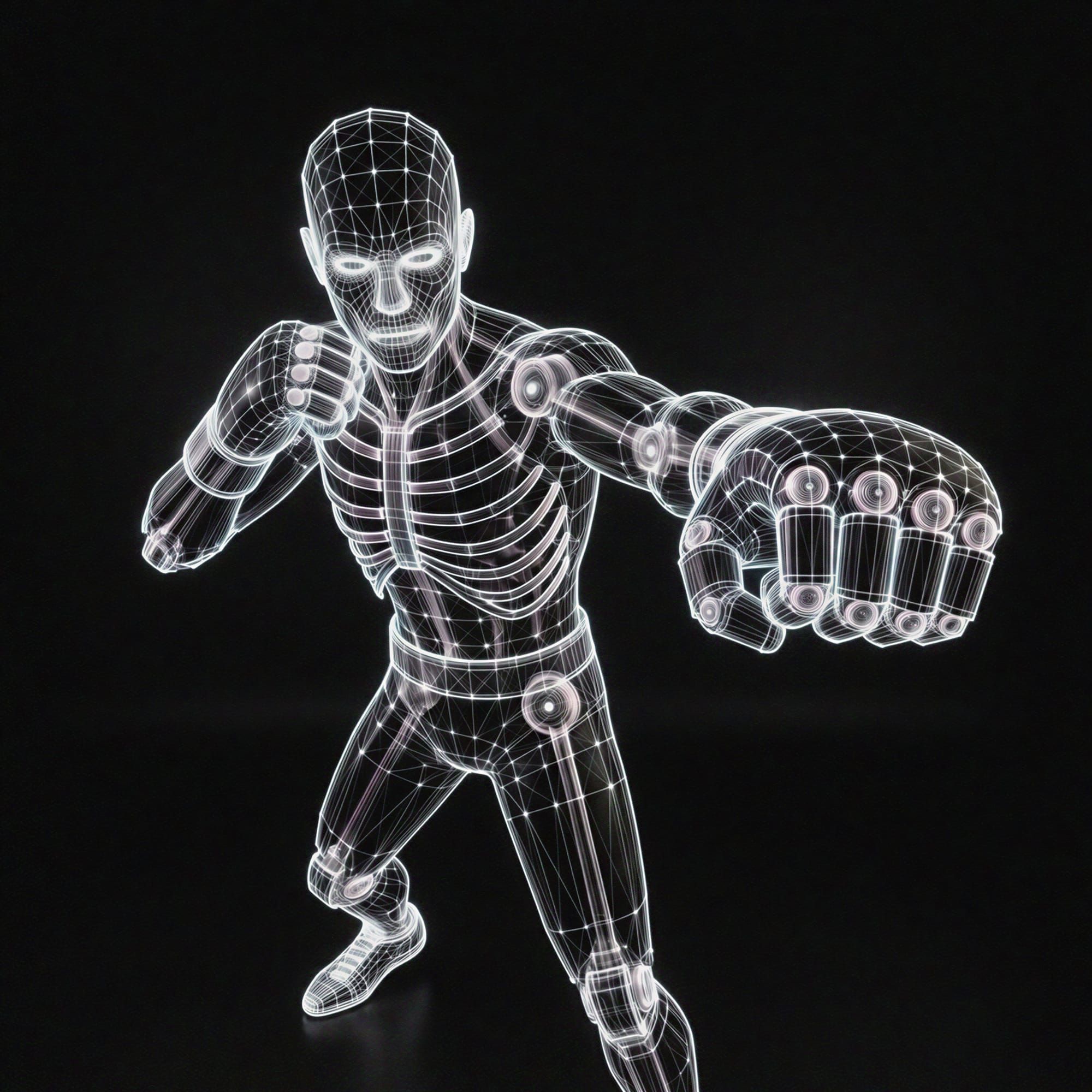
The Signal: The Systems Discipline
Speed is not an input. Speed is a byproduct of alignment.
When you force a timeline, you generate friction. Friction is heat. Heat destroys structures. This is the mechanical reality of systems. It holds true whether you are managing a global network, manipulating a joint, or shaping a physical object.
People confuse velocity with progress. They believe moving faster forces the system to comply. But complex systems have a maximum absorbable rate of change. Exceed it, and the system does not accelerate. It fractures.
The Material Dictates the Pace
Take a piece of Claro Walnut on a lathe. The wood has a specific density. It has grain direction. It holds internal tension from decades of growth. If you force the gouge into the spinning wood faster than the material can shear, you do not finish the bowl faster. You tear the end grain. You splinter the piece. You ruin the work.
The lathe operates at its speed. The material accepts the cut at its speed. You cannot command the wood to ignore its own physics. The discipline is listening and matching the feed rate to the reality of the medium.
The Studio
The same principle governs striking. When you force a punch, you abandon structure. You trade mechanical alignment for physical velocity. The moment you push for speed, muscle tension takes over. Tension acts as a restrictor valve. It freezes the joints that need to act as fluid conduits for the energy. You overextend and create the exact gap your opponent needs to intercept.
More critically, you sever the kinetic chain. Power does not live in the fist. It originates in the earth. Energy travels upward through the legs. It transfers through the rotation of the hips. It crosses the body through the posterior oblique sling. This system transfers rotational energy diagonally across the back. It is the literal bridge that carries power from the planted back foot to the striking shoulder. Within this architecture, every joint is a node. A joint either adds power, loses power through energy leakage, or remains neutral.
When you rush the movement, you disconnect the upper body from its foundation. The arm fires independently. You might gain a fraction of a second, but you leave your mass behind. You generate speed, but you deliver far less consequence. A strike without mass is just motion.
In Jeet Kune Do, you do not hit first by moving faster. You arrive first by eliminating the telegraph. You rely on economy of motion. You align your center of gravity so the physical structure supports the weapon from the ground to the point of impact. The strike lands because you removed every unnecessary movement between origin and target. Speed is simply the symptom of perfect timing meeting zero resistance.
The Network
In large scale integration, forcing data or new protocols through an unoptimized architecture does not increase throughput. It creates bottlenecks. It introduces packet loss and latency. The system throttles itself to survive the friction you introduced.
You do not make a network faster by pushing harder. You make it faster by removing the structural constraints.
The Friction Protocol
If your process requires you to rush, your architecture is flawed.
The disciplined operator recognizes the maximum absorbable rate of change. You do not push the system past its structural limit. You align the variables. You remove the noise. You reduce the friction.
When the alignment is perfect, speed takes care of itself.