The Algorithm of Mastery: Why 80/20 Is a Survival Strategy
The 80/20 principle is not a productivity trick. It’s a survival algorithm for systems that don’t care about your intentions.


The Workshop Ledger
On Systems, Structure, and Survival
Before systems are elegant, they must be survivable.
This piece was written not as theory, but as a working insight—drawn from observing how real systems behave under pressure. Algorithms, organizations, crafts, and even lives are not governed by fairness or effort alone. They are governed by leverage, constraint, and asymmetry.
In the workshop, you learn quickly that perfection is a luxury. What matters first is whether the structure holds. The 80/20 principle is often misunderstood as an optimization trick. In reality, it is a survival heuristic, a way of staying upright inside complex systems that do not care about your intentions.
This essay captures an early articulation of that idea: how focusing on the few variables that truly matter can mean the difference between progress and collapse. It stands as part of an ongoing body of work exploring systems thinking, complexity, and disciplined decision-making across engineering, craft, and life.
Originally published on LinkedIn. Preserved here as part of the Workshop Ledger.
 Thomas Harvey
If you never Explore, you are perfectly optimized for a hill that might be too small. If you never Exploit, you spend your life wandering the valleys.
The Map vs. The Territory
Last week, we explored Systems Thinking, the discipline of looking past the event to see the structure that caused it. That post resonated deeply, but one comment in particular challenged me to go deeper:
"Systems thinking was an extremely useful way to move from local to systems. But now we know more. Systems thinking still maintains an industrial view."
 Thomas Harvey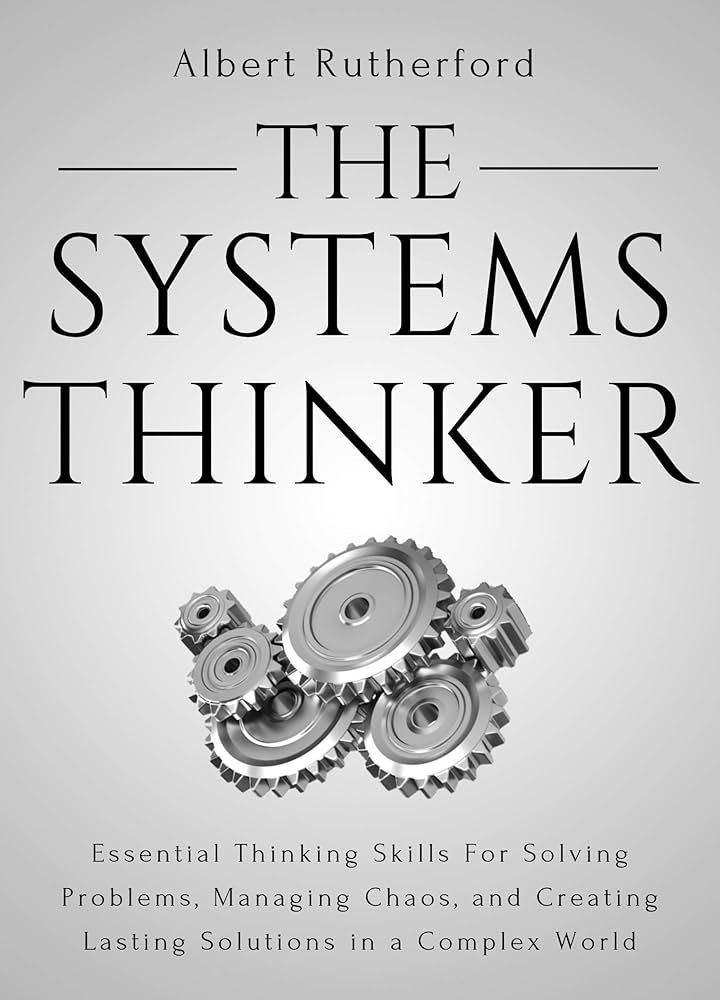
They were right. It sent me straight to Scott E. Page’s Understanding Complexity on The Great Courses Plus, searching for what comes next.
If Systems Thinking is the Map (the wiring diagram that helps us engineer better outcomes), then we need a tool for the Territory: navigating reality as it actually behaves.
Reality is not a machine. It is a Complex System, and the rules change mid-climb.
The 80/20 Instinct
For years, I have enforced a specific ratio in my training, whether in the studio, at the lathe, or designing a network architecture: 80 percent Exploitation. 20 percent Exploration.
Not as a rule of thumb, but as a safeguard against stagnation.
- 80 percent of the time (Exploitation): We drill the known. We refine the gouge cut, perfect the side kick, optimize the current stack for maximum efficiency.
- 20 percent of the time (Exploration): We introduce chaos. We spar with a new style. We test a finish that might ruin the bowl. We purposefully crash the lab network to test the failover logic. We break the routine.
I always called this balance. It turns out, I was teaching an algorithm.
The Rugged Landscape
In Complexity Science, this is known as the Explore versus Exploit Trade-off.
Page explains it using the metaphor of a Rugged Landscape: Imagine a mountain range covered in fog, filled with high peaks, low peaks, and deep valleys.
- Exploitation moves you uphill. It takes you to the very top of the peak you are currently on, a Local Maximum.
- Once there, you are stuck. You have optimized yourself into a corner. You are the king of a small hill.
- To find the higher peak, the Global Maximum, you must Explore. You must be willing to walk downhill, to accept a temporary loss in performance or efficiency, to cross the valley and find the next mountain.
The Trap for Engineers and Leaders
The trap is assuming professional life is like Mt. Fuji: a single massive peak where effort alone always leads upward.
But markets, technology, and careers are Rugged Landscapes.
If you treat a rugged system like Mt. Fuji, you do not get unlucky. You get stuck. You optimize for a Local Maximum, yesterday’s technology or yesterday’s business model, and mistake it for the summit.
Systems Thinking helps you build the machine to climb the hill. Complexity Science tells you when it is time to walk back down and find a new one.
The Question
Where is your ratio today?
Are you stuck optimizing a Local Maximum, or are you lost in the valleys? Is 80/20 the right balance for steady state, or does your industry demand a different algorithm?
I explore the intersection of Systems Engineering, Craftsmanship, and Strategy. If this resonated, subscribe to The Signal below for monthly notes from the workshop.